Governments Are Sounding the Alarm for 2026 — Here's How Homeowners in Canada, the US and Australia Should Actually Prepare
2026-05-31

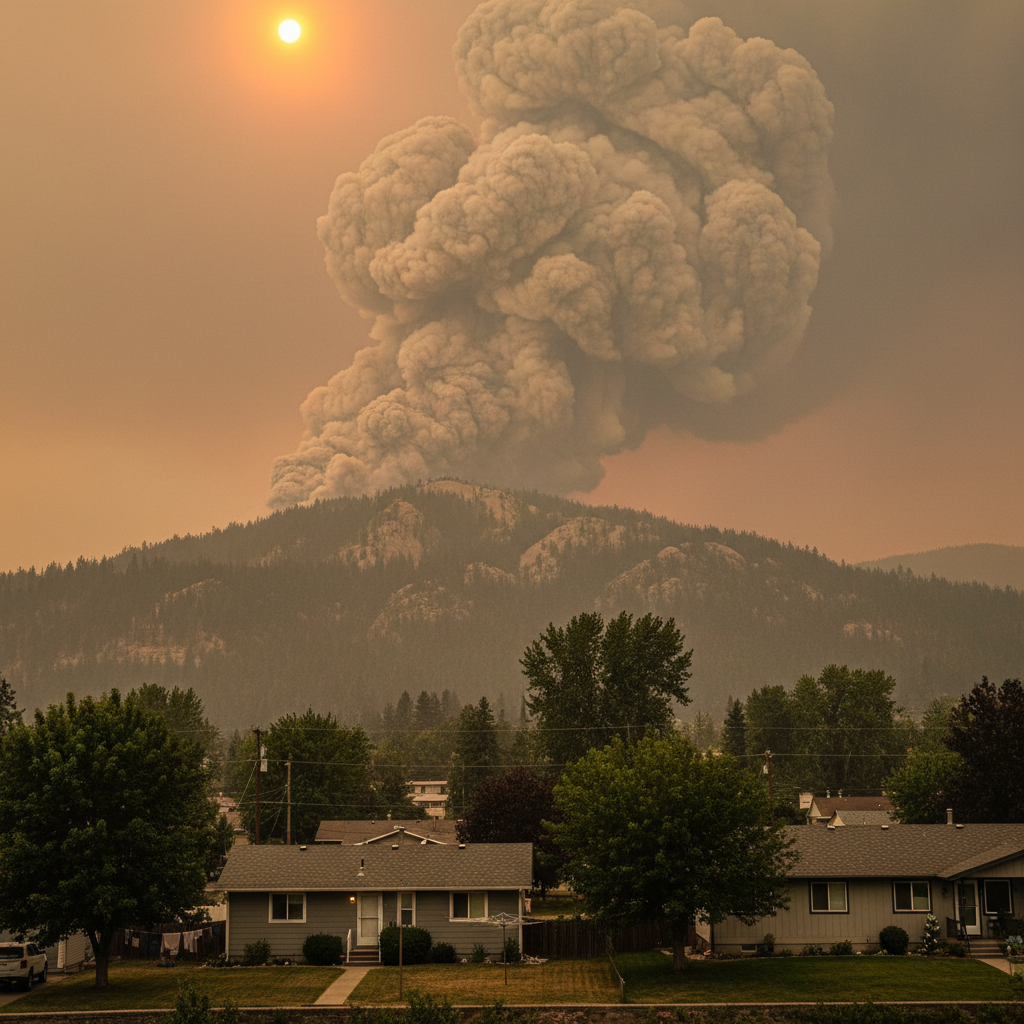
Public Safety Canada is forecasting above-normal fire danger building through July, with British Columbia facing the highest sustained risk. The US is bracing for an above-normal western season, and Australia heads into a heightened-risk outlook. The official message everywhere is the same: prepare now — and preparation has to go beyond a 72-hour kit.
In the final week of May 2026, the Government of Canada released its updated wildfire season outlook. The language was measured, but the signal was not: above-normal temperatures across nearly every region, persistent multi-year drought, and fire danger forecast to build through July — with British Columbia facing the highest and most sustained fire risk in the country. Thousands of kilometres away, the United States is bracing for an above-normal western season, and Australia is heading into its own heightened-risk outlook. Three countries, three fire regimes, one identical instruction from every emergency agency: prepare now.
What Canada Just Told Its Citizens
Public Safety Canada's 2026 backgrounder is direct. Natural Resources Canada's modelling shows fire danger building through July right across the country, with elevated danger able to “emerge quickly” in parts of northern, central and eastern Canada. Drought has persisted for several years, and above-normal heat is forecast for June, July and August — exactly the conditions that turn a single lightning strike into a fast-moving, structure-threatening event.
The federal government is responding at scale: $316.7 million over five years for new aerial firefighting aircraft, $285 million to reduce wildland fire risk and expand FireSmart™ guidance, and tens of millions more for community preparedness, alerting systems and firefighter training. These are serious investments. But the same document is honest about a reality every homeowner needs to absorb.
The Resource Reality
On the worst days of recent seasons, more than 1,100 wildfires have burned across Canada simultaneously. When that many fronts are active at once, individual homes cannot be the priority. The gap between the moment your family evacuates and the moment a crew can reach your street is the gap homeowners must plan to close themselves.
The Same Warning, on Three Continents
This is not a Canadian story. In the United States, the National Interagency Fire Center's 2026 outlook projects above-normal wildfire potential across much of the West — including sustained above-average risk in Washington State through the summer — alongside elevated potential in drought-stricken parts of the Southeast. In Australia, AFAC's Seasonal Bushfire Outlooks identify a heightened risk of fire across New South Wales, Victoria and Western Australia. The fuel, the heat, and the expanding wildland-urban interface are converging in every fire-prone country at once.
How to Actually Prepare — The Full Hierarchy
Every agency — Canada's FireSmart, the United States' Firewise USA, Australia's AS 3959 building standard — agrees on the foundations. The trouble is that most homeowners stop at the first one or two rungs. Here is the complete ladder, from essential baseline to the layer that actually decides what happens to your house during the fire.
From baseline to survival
- Baseline — Build a 72-hour kit and a written evacuation plan. Water, medications, documents, chargers, two ways out, an agreed meeting point. This protects your family, not your home.
- Passive — Create defensible space and harden the structure. Clear vegetation, Class A roofing, ember-rated vents, boxed eaves, nothing combustible against the walls. Essential — but it does all its work before the fire arrives.
- Awareness — Understand your specific risk based on slope, fuel, prevailing wind and fire history, not just your postcode. A free address-level assessment turns a vague worry into a concrete plan.
- Active — Add engineered exterior protection. The only measure that keeps working during the fire, after you've evacuated and while crews are stretched elsewhere. The rung almost everyone skips — and the one that decides survival.
Why a Kit and Defensible Space Aren't Enough on Their Own
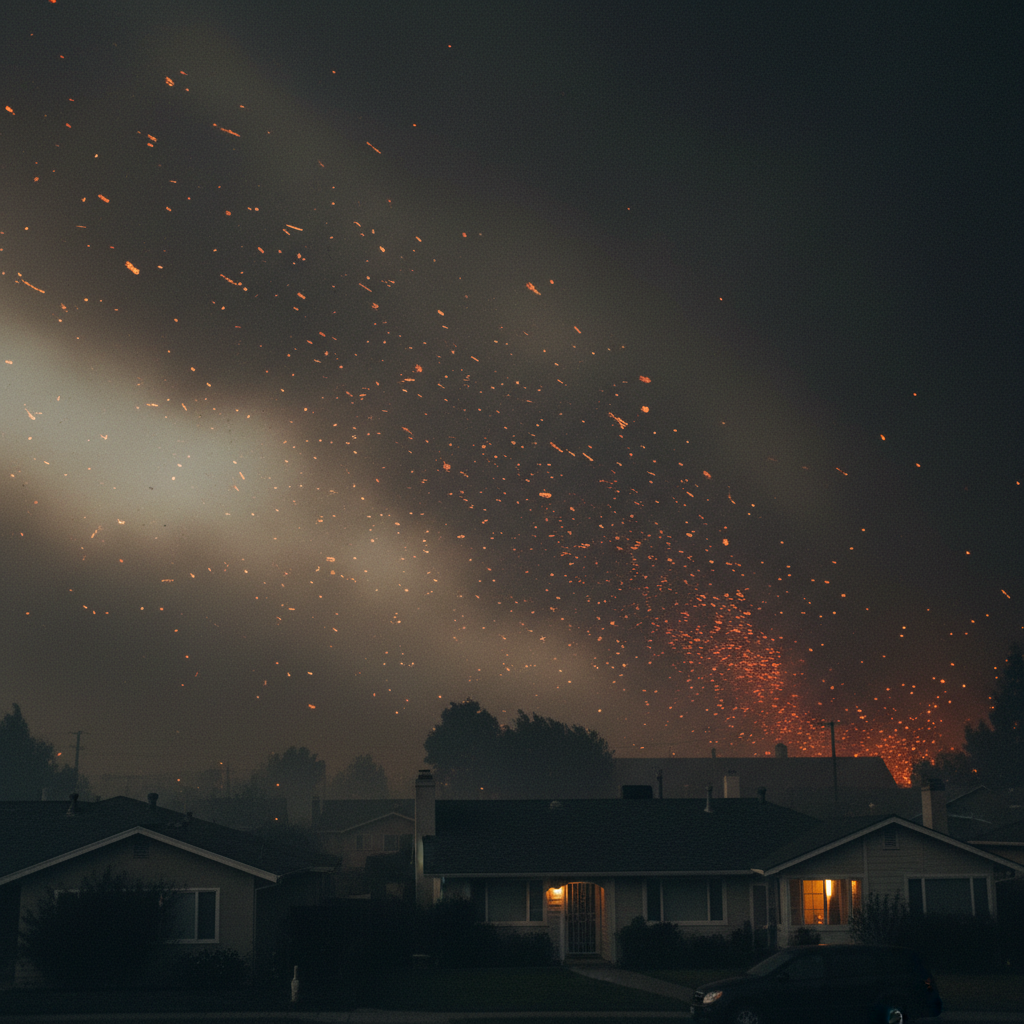
Here is the physics the press releases gloss over. Up to 90% of homes destroyed in wildfires are not ignited by the visible wall of flame. They are ignited by wind-driven embers that travel two kilometres or more ahead of the fire front, landing on roofs, collecting in gutters, and finding their way into re-entrant corners and vents. No amount of cleared brush stops an ember from landing on your roof. Defensible space reduces the chance that ember catches — but it is passive. Once you've evacuated and the ember storm begins, it cannot do anything more.
"Defensible space does all of its work before the fire arrives. What happens to the house in the next four hours depends on whether anything active is left on the property to keep working."
What Active Protection Adds — and How It Works
An engineered exterior wildfire sprinkler system is permanent infrastructure built onto the home. Concealed plumbing runs through the eaves and along the roofline, with engineered nozzles placed at the ridge, the perimeter, and over the corners where embers concentrate. It draws from whatever water source the property has — municipal supply, well, tank, pool, pond or cistern — and connects over wifi with a cellular fallback, so activation never depends on a single point of failure. From an evacuation centre eighty kilometres away, one tap pre-soaks the entire building envelope hours before the fire front arrives.
Three layers of active defence
- Evaporative cooling drops surface temperatures below the ignition point of wood, even under intense radiant heat.
- A humidity barrier saturates the air around the structure, so embers that land simply cannot find dry fuel to ignite.
- Sustained duration keeps the system running for hours — the full length of the threat window — not the few minutes a garden hose can manage.
This is not theoretical. In British Columbia's Logan Lake in 2021, every sprinkler-protected home survived a 63,000-hectare fire. Not one reported structural damage.
Your 2026 Pre-Season Checklist
- Sign up for official alerts — Canada's National Public Alerting System, US Wireless Emergency Alerts, or your Australian state fire service app.
- Pack the 72-hour kit and rehearse the evacuation route with everyone in the household before the danger period peaks — not during it.
- Complete this season's defensible-space work now: clear gutters and the 0–5ft non-combustible zone, move firewood away from walls, trim overhanging branches.
- Get an address-level risk assessment so you know your real exposure and can prioritise where protection matters most.
- Install active protection before demand surges — installation can take as little as a day, but the queue grows every summer.
The Governments Have Done Their Part. The Last Layer Is Yours.
Canada, the United States and Australia are investing billions in aircraft, crews, alerting systems and community programs — and being honest about the limits of what public firefighting can reach on the worst days. Every outlook reaches the same conclusion: homeowners must take active steps to protect their own properties. A 72-hour kit protects your family. Defensible space improves your odds. Knowing your risk sharpens your plan. But only active, engineered protection keeps defending your home in the hours when no one else can — which is exactly when homes are lost.
Start Before the Season Peaks
Understand your risk with a free address-level wildfire assessment, then speak with our team about engineered protection tailored to your property. Installation usually takes 2-3 days, but demand surges every summer. The window to prepare is open now.
Is your property at risk?
Get your free wildfire risk assessment
Two minutes, address-level analysis, no account required — see your property's risk score and what's driving it.
Run my free assessment