
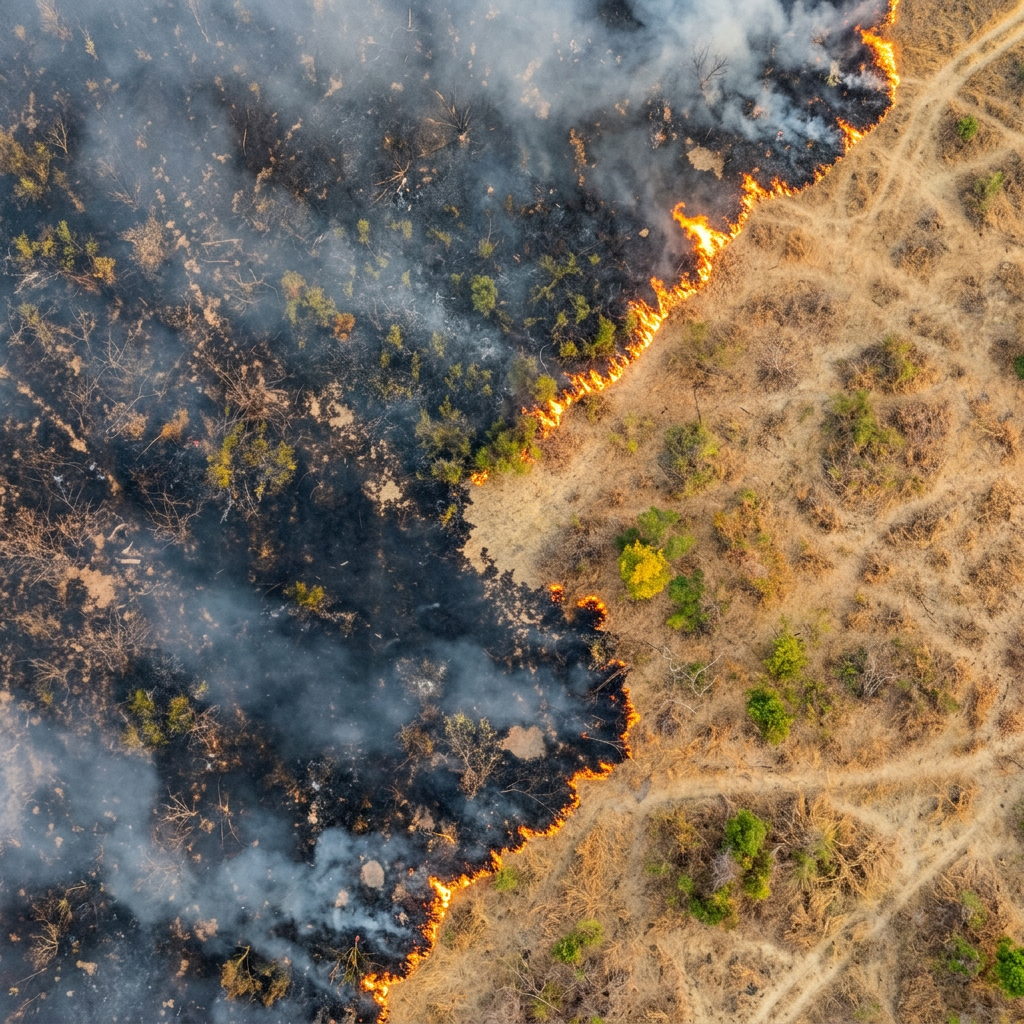

How Wildfires Spread
How wildfires start, how they spread, and what you can do to prepare and protect your property across the USA, Canada & Australia.
Knowledge Is Your First Defense.
Understanding how wildfires spread gives you the power to prepare. Before the next fire season begins.
Pro Tip
Prodigy systems achieve full property saturation in just 3 minutes — fast enough to defend against approaching embers.
Knowledge Is Your First Defense.
Understanding how wildfires spread gives you the power to prepare. Before the next fire season begins.
Pro Tip
Prodigy systems achieve full property saturation in just 3 minutes — fast enough to defend against approaching embers.
How Wildfires Destroy Homes and Businesses
Understanding the three mechanisms of wildfire damage is the first step toward effective protection. Most people assume direct flames cause the most destruction, but the reality is very different.
Ember Attack
Ember travel distance
Radiant Heat
Radiant heat temperature
Direct Flame Contact
Least common cause of loss
Ember travel distance
Ember Attack
Ember attack is the process by which wind-borne burning fragments, carried ahead of a wildfire front, land on or near structures and ignite them. It is the number one cause of structure loss during wildfires, with embers travelling over 12 miles ahead of the fire front, reaching up to 2,192°F at peak surface temperature, and starting new fires far from the main blaze.
Radiant heat temperature
Radiant Heat
Radiant heat from a nearby wildfire flame zone can exceed 1,832 °F, igniting materials without direct contact. This intense heat can crack windows, melt siding, and weaken structural elements, allowing embers to enter even before flames arrive.
Least common cause of loss
Direct Flame Contact
When the fire front reaches a structure, direct flame contact ignites anything in its path. However, research shows this is actually the least common cause of home loss - most structures are destroyed by embers and radiant heat well before the fire front arrives.
The Anatomy of a Wildfire
Understanding exactly how wildfires spread and destroy properties is the first step toward meaningful protection. Here is the science behind how a distant fire becomes a threat to your home or business.
How Wildfires Start
- Lightning strikes cause ~50% of wildfire ignitions in remote areas
- Dead vegetation below 15% fuel moisture content is extremely flammable
- Wildfires can grow by several hectares per minute in extreme wind conditions
Fire Climbs Into the Canopy
- Crown fire combustion temperatures reach 800–900°C, with flame zones exceeding 1,000°C
- Pyroconvective columns can reach 10+ km into the atmosphere
- Fire-generated thunderstorms (pyroCb) create lightning that starts new fires
The Invisible Threat Arrives
- Embers travel up to 20 km ahead of the visible fire front
- A single wind-facing ember can reach nearly 1,200°C surface temperature
- Ember showers can last 4–8 hours during major fire events
How Properties Are Destroyed
- Up to 90% of homes lost to wildfire are ignited by embers, not direct flame
- Structures can ignite 30–60 minutes before the fire front arrives
- Fewer than a dozen of ~16,000 structures destroyed in the 2025 LA fires had been rebuilt one year later
How Protection Changes the Odds
- At Logan Lake (2021), all 250 sprinkler-equipped homes survived the Tremont Creek wildfire
- Systems operate autonomously for 4–8 hours — no one needs to be home
- Wet surfaces are significantly harder to ignite, reducing ember attack risk
surface temperatures that trigger spontaneous ignition
Phase 1
How Wildfires Start
A wildfire begins when extreme heat, dry vegetation, and an ignition source collide. Record-breaking temperatures, prolonged drought, and low humidity dry out forests, grasslands, and urban fringe vegetation until a single spark — from lightning, power lines, or human activity — triggers ignition. In these conditions, small fires become large fires within minutes.
- Lightning strikes cause ~50% of wildfire ignitions in remote areas
- Dead vegetation below 15% fuel moisture content is extremely flammable
- Wildfires can grow by several hectares per minute in extreme wind conditions
fire spread rate through forest canopy
Phase 2
Fire Climbs Into the Canopy
Once a surface fire reaches sufficient intensity, it climbs into the tree canopy and becomes a crown fire — the most dangerous phase. Crown fires race across treetops generating their own weather systems with convective columns reaching 10,000 metres. These columns loft burning debris high into the atmosphere, creating the ember showers that destroy properties kilometres ahead of the visible flame front.
- Crown fire combustion temperatures reach 800–900°C, with flame zones exceeding 1,000°C
- Pyroconvective columns can reach 10+ km into the atmosphere
- Fire-generated thunderstorms (pyroCb) create lightning that starts new fires
distance embers travel ahead of the fire front
Phase 3
The Invisible Threat Arrives
Burning embers — fragments of bark, branches, and debris — are launched into the atmosphere by powerful updrafts and carried by wind for extraordinary distances. These embers can land on roofs, in gutters, against fences, and in any gap or crevice. Research from the U.S. Forest Service and CSIRO Australia confirms that ember attack is responsible for up to 90% of structure losses during major wildfire events.
- Embers travel up to 20 km ahead of the visible fire front
- A single wind-facing ember can reach nearly 1,200°C surface temperature
- Ember showers can last 4–8 hours during major fire events
of structure losses caused by ember attack, not direct flame
Phase 4
How Properties Are Destroyed
When embers land on dry surfaces — leaf litter in gutters, timber decking, welcome mats, stored firewood — they smoulder, ignite, and spread to the structure. This process begins up to 60 minutes before the visible fire front arrives. By the time flames reach the neighbourhood, most unprotected homes are already burning. Defensible space alone cannot prevent ignition when embers rain from the sky.
- Up to 90% of homes lost to wildfire are ignited by embers, not direct flame
- Structures can ignite 30–60 minutes before the fire front arrives
- Fewer than a dozen of ~16,000 structures destroyed in the 2025 LA fires had been rebuilt one year later
documented survival rate for sprinkler-protected structures in major fire events
Phase 5
How Protection Changes the Odds
Engineered wildfire sprinkler systems saturate the roof, walls, and surrounding defensible space with water — creating a humidity envelope that neutralises embers on contact. Surface temperatures drop below ignition thresholds. The property remains wet throughout the entire threat window. In multiple documented fire events, sprinkler-protected structures have survived at dramatically higher rates than unprotected properties in identical conditions.
- At Logan Lake (2021), all 250 sprinkler-equipped homes survived the Tremont Creek wildfire
- Systems operate autonomously for 4–8 hours — no one needs to be home
- Wet surfaces are significantly harder to ignite, reducing ember attack risk
The Impact of Drought, Heat and High Winds
Our changing climate is rewriting the wildfire landscape across North America and Australia. Hotter temperatures, drier seasons, and more extreme weather are creating conditions where fires ignite faster, spread farther, and burn with unprecedented intensity. Communities across the USA, Canada, and Australia are facing longer fire seasons, more severe fire behaviour, and record-breaking destruction, making proactive wildfire sprinkler systems essential for every home and business in fire-prone regions.
"Climate change has been a key factor in increasing the risk and extent of wildfires. Rising temperatures, more frequent droughts, and decreasing summer rainfall are all contributing to longer fire seasons and increased wildfire activity across the globe."
— NASA Science - Climate-Driven Wildfire Trends
The Reality of Wildfire
The data is clear - proactive wildfire protection saves homes, businesses, and lives.
Of structure losses are caused by ember attack, not direct flame
Source: U.S. Forest Service
Embers travel 20+ km ahead of the fire, igniting unprotected roofs and gutters.
Sprinkler-protected homes survived the 2021 fire in Logan Lake, BC
Source: BC Wildfire Service
Neighbouring unprotected properties were completely destroyed.
In insured wildfire losses in the USA in 2024 alone
Source: Insurance Information Institute
Insurers withdrawing from fire zones — premiums up 300% or coverage denied.
Your Step-by-Step Wildfire Preparedness Guide
Wildfires across the USA, Canada, and Australia can escalate from warning to evacuation in minutes. This emergency action plan will help you protect your family, your property, and your livelihood before, during, and after a wildfire event.
Know Your Wildfire Risk Level
Check local fire danger ratings from CAL FIRE (USA), Alberta Wildfire (Canada), or the CFA (Australia). Sign up for emergency alerts and know your evacuation zones and routes before fire season begins.
Keep Your Vehicle Fuelled
Always maintain a full tank so you can evacuate quickly if wildfire conditions change. Being ready to move at a moment's notice can save lives and reduce stress in an emergency.
Pack an Emergency Bag
Prepare a go-bag with essentials, water, medications, important documents, and protective gear, so you're ready to leave safely at any time. A well-stocked emergency kit ensures you have what you need when minutes count.
Have a Plan
Develop and rehearse an evacuation plan with your family or team, including multiple escape routes and safe meeting points. Knowing exactly what to do ahead of time minimises confusion and keeps everyone safe.
Keep Your Vehicle Fuelled
Always maintain a full tank so you can evacuate quickly if wildfire conditions change. Being ready to move at a moment's notice can save lives and reduce stress in an emergency.
Pack an Emergency Bag
Prepare a go-bag with essentials, water, medications, important documents, and protective gear, so you're ready to leave safely at any time. A well-stocked emergency kit ensures you have what you need when minutes count.
Have a Plan
Develop and rehearse an evacuation plan with your family or team, including multiple escape routes and safe meeting points. Knowing exactly what to do ahead of time minimises confusion and keeps everyone safe.
Wildfire by the Numbers
Wildfires are escalating across three continents. These figures show the scale of the crisis facing communities in the USA, Canada, and Australia.

USA

Canada

Australia