
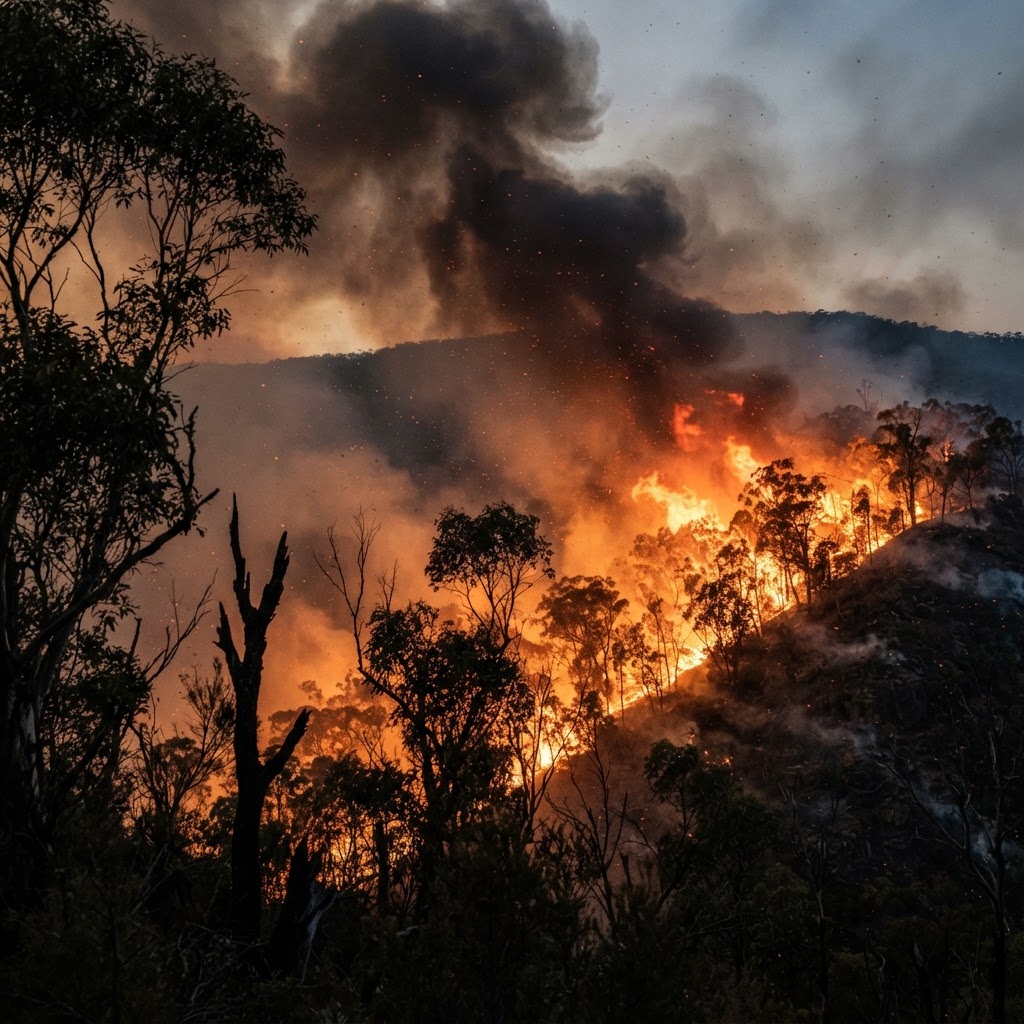

Australia doesn't need to be convinced that exterior sprinklers work against bushfire. Australia produced the science. CSIRO researchers and AFAC — the national council of fire authorities — jointly developed the country's guideline for spray systems designed to defeat ember attack. What Australia hasn't done yet is deploy that science at the scale its communities need. That's the gap Prodigy exists to close.
The Number Every Australian Fire Authority Agrees On
The NSW Rural Fire Service puts it bluntly: over 80% of homes destroyed during bushfire emergencies are lost to ember attack — often hours after the fire front has passed, when nobody is there to defend them. CSIRO post-fire surveys going back to the 1983 Ash Wednesday fires reach the same conclusion. Homes don't usually burn because a wall of flame reaches them. They burn because millions of burning fragments rain onto dry roofs, gutters, decks and gardens.
What Australia's Worst Fires Taught Us
Black Saturday 2009
2,000+
homes destroyed in Victoria
Black Summer 2019–20
2,448
homes lost in NSW alone
Cause of Loss
80%+
destroyed by ember attack
Sources: NSW Rural Fire Service; Victorian Royal Commission (2009); CSIRO post-fire surveys
The Guideline Most Australians Have Never Heard Of
After decades of post-fire evidence, AFAC and CSIRO published a national guideline with an unglamorous name and an extraordinary implication: "Bushfire spray systems for the protection from ember attack." It codifies what survivor after survivor had reported — properties that stayed wet through the ember storm stayed standing.
The Victorian Royal Commission into Black Saturday heard the same pattern: among the homes that survived in the worst-hit areas, active water application — sprinklers, pumps, sprayed rooflines — appeared again and again. The physics has never been in dispute. A saturated surface cannot ignite, and air loaded with moisture starves an ember of the dry fuel it needs.
From One Home to a Protected Street
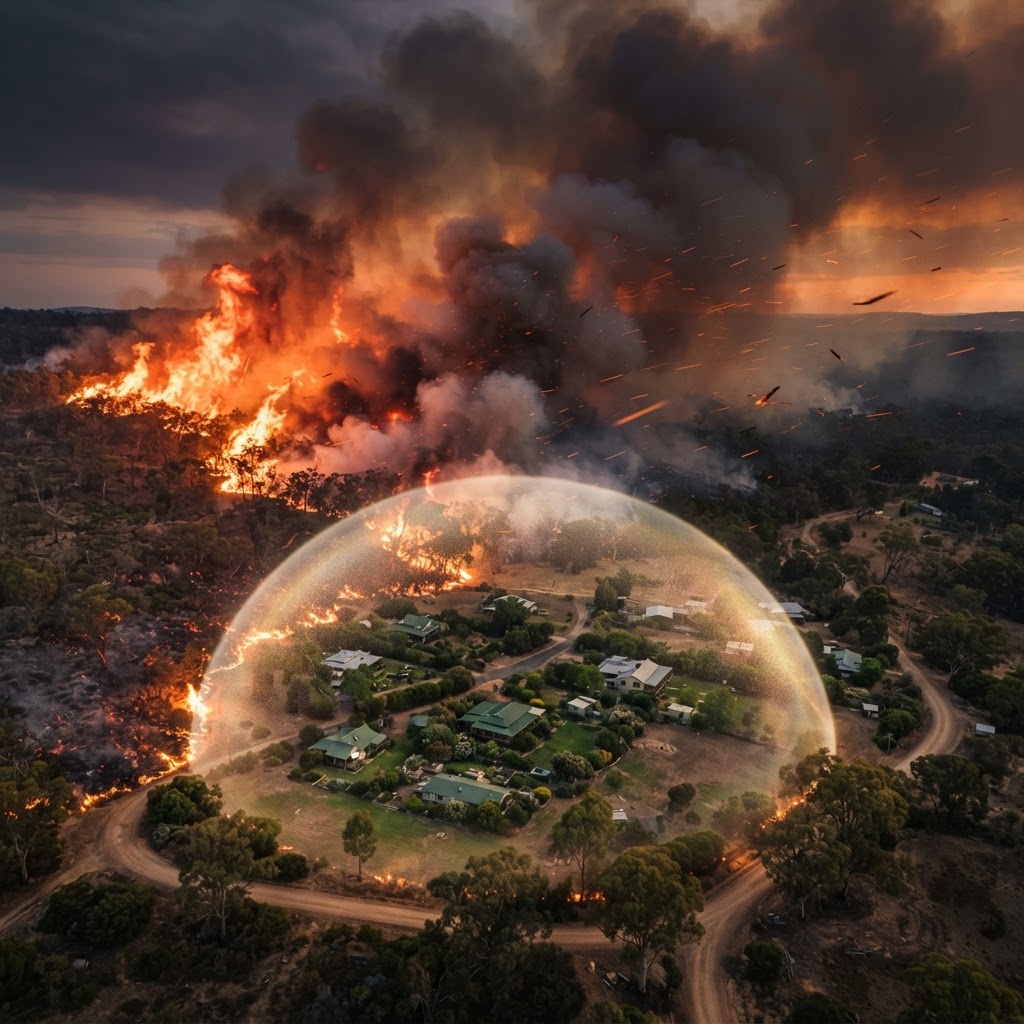
Here's what the Australian evidence points to next: the humidity bubble scales. When neighbouring properties run engineered spray systems simultaneously, their moisture envelopes overlap. A street becomes a corridor of elevated humidity that embers cannot cross alive. This is precisely how fire agencies protect townships during campaigns — sprinkler lines around the perimeter — except a permanent, resident-owned network doesn't depend on a strike team arriving in time.
Prodigy Wildfire Solutions installs engineered bushfire sprinkler systems across NSW, Victoria and Queensland — automated ember detection, roof-mounted coverage designed to the property, and remote app activation so the system defends your home after you've evacuated. It's the AFAC/CSIRO concept, engineered and maintained as permanent infrastructure.
Working Together: Communities, Councils, Brigades
Australia's bushfire story has always been a community story — brigades staffed by volunteers, street-level fire plans, neighbours defending neighbours. Community-scale sprinkler protection is the natural next chapter. Rural Fire Service brigades, community associations and local councils partnering on street-by-street protection can change the survivability of entire towns — the same way community FireSmart programs did in Canada and FEMA-funded sprinkler networks did in the United States.
Sources & Further Reading
- NSW Rural Fire Service — guidance on ember attack as the leading cause of home loss in bushfires (rfs.nsw.gov.au)
- CSIRO — bushfire adaptation research and post-fire building surveys, including Ash Wednesday 1983 (csiro.au)
- AFAC & CSIRO — guideline: Bushfire spray systems for the protection from ember attack (afac.com.au)
- 2009 Victorian Bushfires Royal Commission — Final Report, Parliament of Victoria (home loss and survival findings from Black Saturday)
- NSW Parliamentary Research Service — 2019–20 Black Summer bushfire season statistics (homes destroyed in NSW)
Statistics and case details are drawn from these publicly available reports and official sources. All analysis and commentary is Prodigy Wildfire Solutions' own original work.