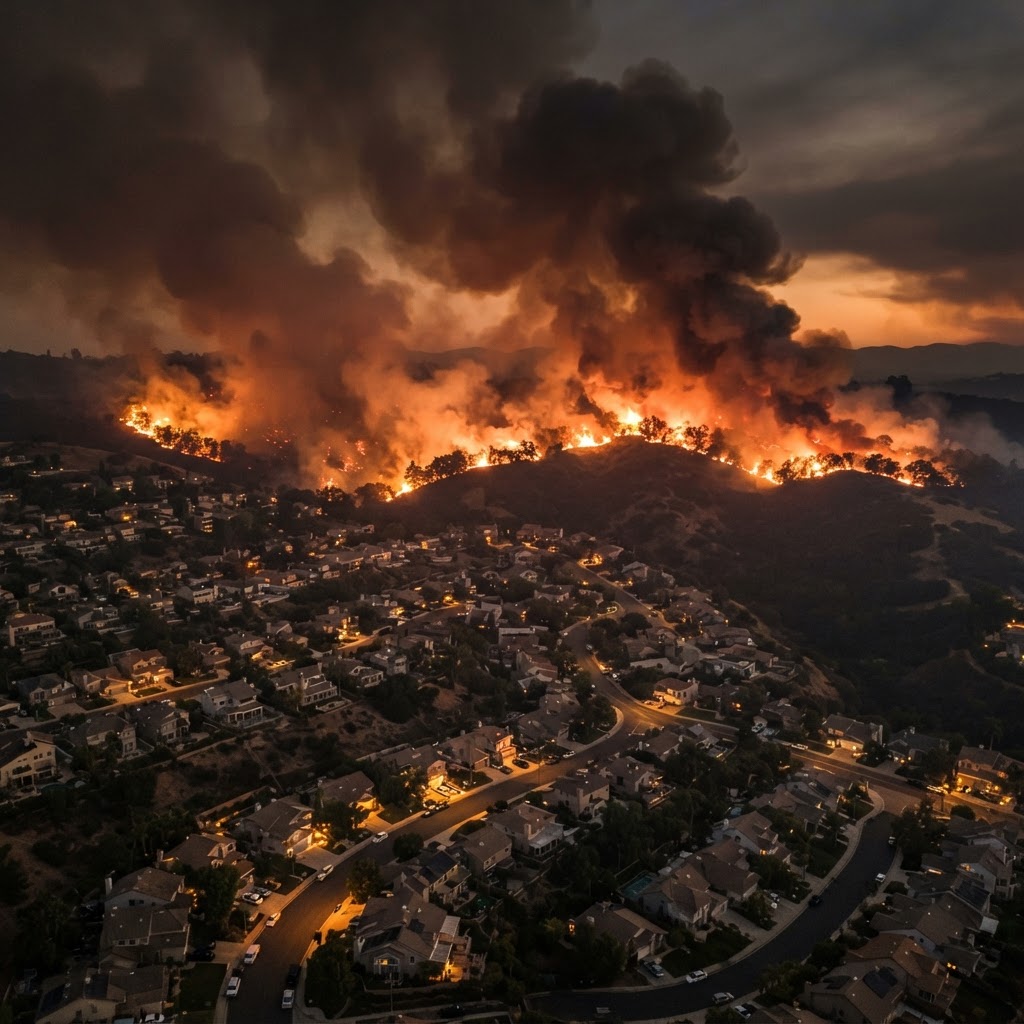

Science rarely gets three independent replications at continental scale. Wildfire sprinkler protection has them. In the United States, Canada and Australia — different forests, different fire regimes, different building codes — the same intervention produced the same outcome. The homes and communities that stayed wet, stayed standing. This is the story of a principle proving itself around the world, and what happens when we act on it together.
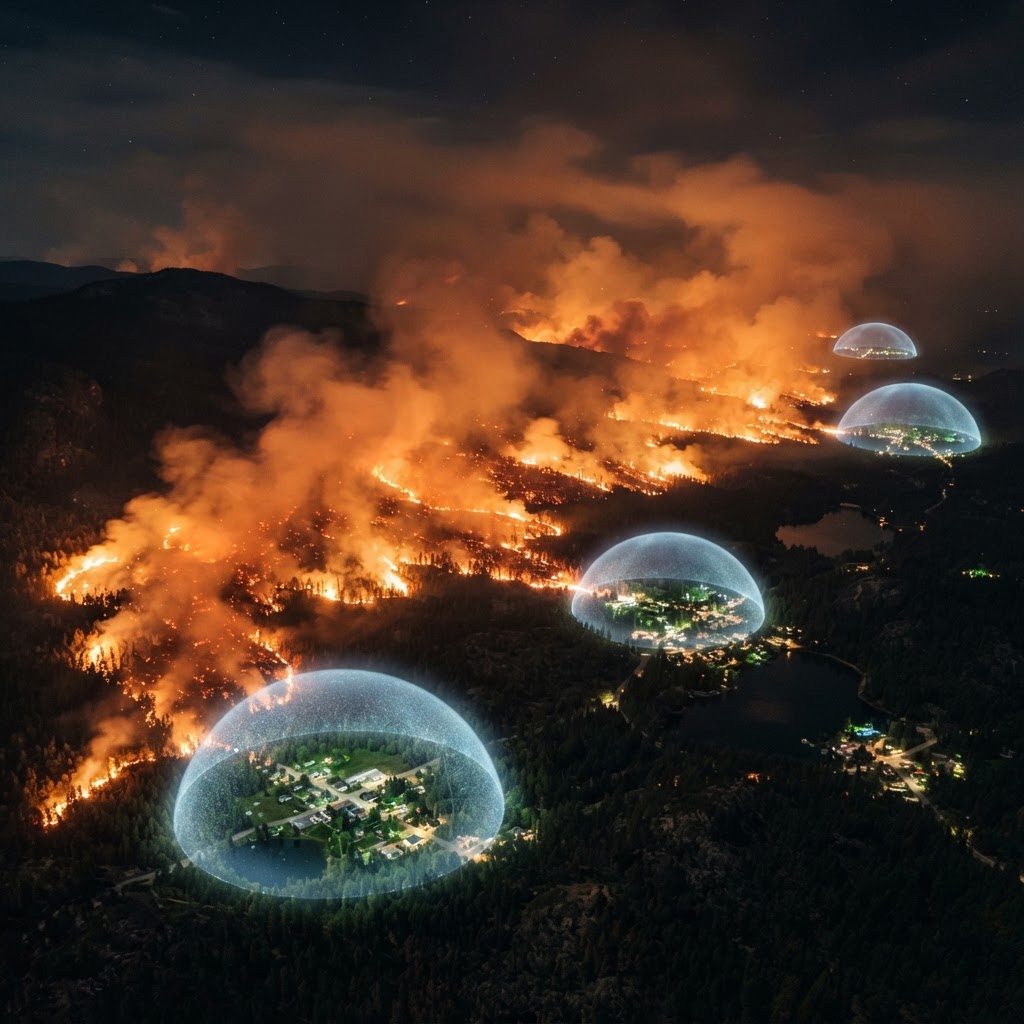
Three Replications of the Same Result
The Principle Underneath All of It
Strip away the geography and every proven case reduces to one mechanism. Wildfire destroys buildings primarily through ember attack — up to 90% of losses in the US Forest Service's data, over 80% in Australia's. Embers need one thing to become a house fire: dry fuel. An engineered exterior sprinkler system removes it.
Run through the threat window, the system saturates every surface, cools them below ignition temperature through evaporation, and loads the surrounding air with moisture. The property sits inside a humidity bubble — a moisture envelope where combustion chemistry simply stops working. It's not a gadget. It's applied physics, verified on three continents.
Why This Takes All of Us
Logan Lake wasn't one homeowner's decision — it was a decade of FireSmart community work. The Gunflint Trail was FEMA grants plus neighbours sharing lake pumps. Australia's guideline came from fire authorities and scientists collaborating nationally. Every proven case is a partnership story.
Prodigy Wildfire Solutions was built for exactly this collaboration — engineering and installing permanent exterior sprinkler systems across Australia, Canada and the United States, and partnering with the people who move communities: insurance brokers, realtors, councils, FireSmart coordinators, brigades and community associations. The free tools are the starting line: a property risk assessment for any address in our three countries, and the EmberWatch live fire map tracking every active fire in all three, updated every five minutes.
Sources & Further Reading
- Minnesota DNR — Lessons Learned from the Ham Lake Fire and the Gunflint Trail (dnr.state.mn.us)
- FireSmart BC & BC Wildfire Service — Logan Lake community protection program (firesmartbc.ca)
- CSIRO & AFAC — Australian bushfire spray-system guideline and post-fire building surveys (csiro.au)
- 2009 Victorian Bushfires Royal Commission — Final Report (Black Saturday survival findings)
- US Forest Service & NIST — research attributing up to 90% of WUI home losses to ember ignition (fs.usda.gov)
- CBC News & Parks Canada — Jasper 2024 and Nova Scotia sprinkler protection coverage (cbc.ca)
Statistics and case details are drawn from these publicly available reports and news coverage. All analysis and commentary is Prodigy Wildfire Solutions' own original work.