
The Wildfire Insurance Crisis: What It Means for Your Home - and How to Stay Insurable
2026-03-20
An $800 billion insurance gap. Surging FAIR Plan enrollment. Premiums that double overnight. The wildfire insurance crisis is reshaping property ownership, and proactive protection is becoming the key to staying insurable.
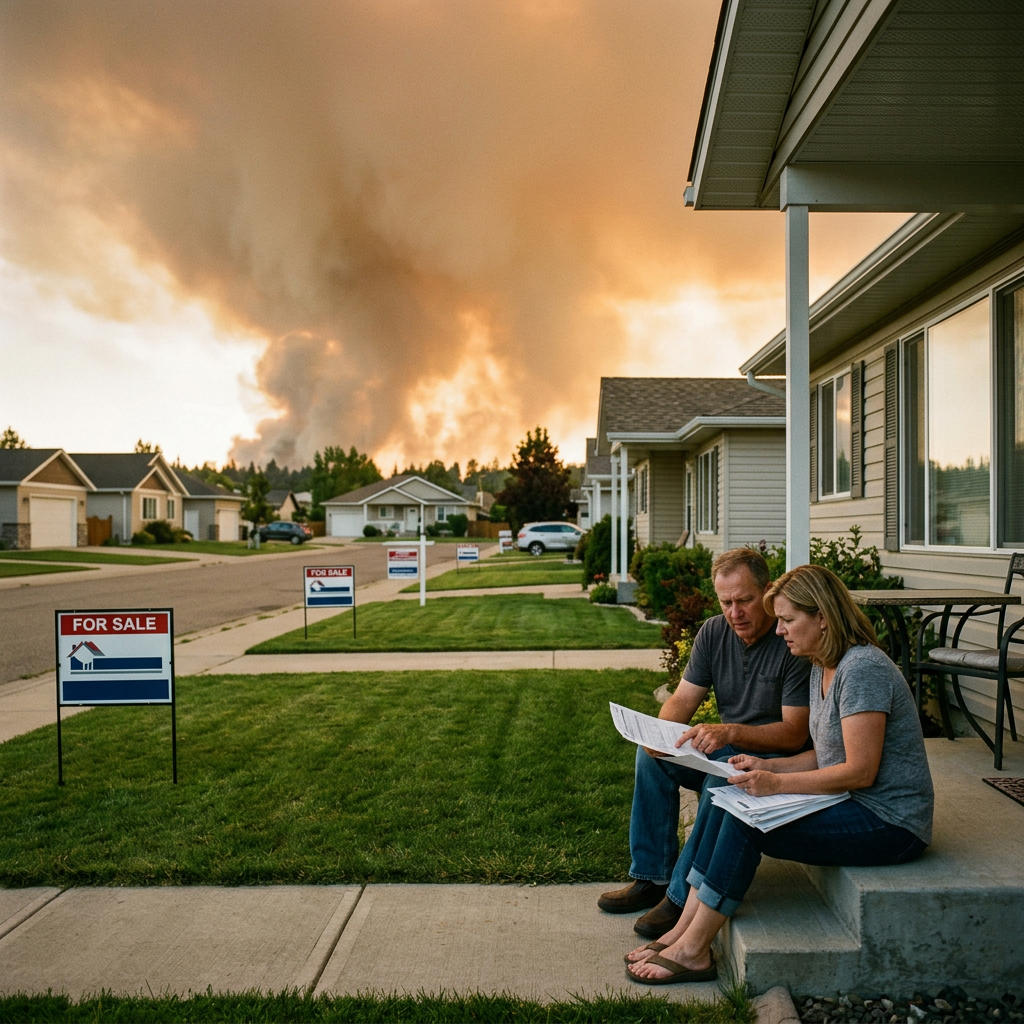
Across the American West, a quiet crisis is reshaping property ownership. Insurance companies are pulling out of fire-prone areas, premiums are doubling, and California’s insurer of last resort - the FAIR Plan - has seen enrollment surge 43% in just over a year. For homeowners in wildfire zones, the question is no longer just ‘will my home survive a fire?’ but ‘can I even insure it?’
Original Reporting
This article draws on reporting and analysis from McKinsey & Company, Inside Climate News, Bloomberg Law, the California Department of Insurance, and The New York Times. We encourage readers to explore these sources for the full economic and policy context.
The Scale of the Crisis
McKinsey’s research reveals that California’s single-family housing market faces a private-insurance coverage gap of $800 billion for wildfire alone. Major insurers including State Farm and Allstate have stopped writing new policies in high-risk areas. Even homes in lower-risk neighbourhoods are being swept up, as insurers apply blanket regional restrictions rather than property-by-property assessments.
"The coverage gap is not a future risk. It is a present reality. $800 billion in California property value currently sits outside the private insurance market for wildfire."
The FAIR Plan - California’s state-backed insurer of last resort - was never designed to be a primary insurer. Yet enrollment surged from an already elevated base to over 450,000 policies by late 2025, with many policies offering less coverage at higher prices than standard insurance. For homeowners who cannot obtain FAIR coverage either, the prospect of being entirely uninsured becomes real.
The Domino Effect on Property Value
The insurance crisis does not just affect premiums - it affects your home’s resale value. Mortgage lenders require homeowners insurance. If insurance becomes unavailable or prohibitively expensive in your area, potential buyers face the same problem. Properties in uninsurable zones are already seeing depressed sale prices and longer time on market.
How the Insurance Crisis Affects Homeowners
- Non-renewal notices - existing policies cancelled or not renewed at expiry
- Premium increases of 100–300% - even for homes with no claims history
- Coverage reductions - lower limits, higher deductibles, wildfire exclusions
- FAIR Plan as only option - less coverage, higher cost, limited scope
- Property value impact - uninsurable homes are harder to sell and finance
- Mortgage complications - lenders may require alternative coverage arrangements
Why Insurers Are Leaving - and What Brings Them Back
Insurance is a business of risk pricing. When losses consistently exceed premiums - as they have in California wildfire zones - insurers either raise prices or leave. California’s regulatory environment historically limited rate increases, which incentivised withdrawal rather than repricing. New regulations under the state’s Sustainable Insurance Strategy are attempting to reverse this by allowing risk-based pricing in exchange for commitments to write policies in higher-risk areas.
Critically, these new regulations also incentivise home hardening. Insurers are increasingly offering premium discounts for properties that demonstrate measurable wildfire mitigation: fire-resistant construction, defensible space, and active protection systems. The logic is straightforward - a home that is harder to destroy is cheaper to insure.
"A home that is harder to destroy is cheaper to insure. That is the new equation driving the wildfire insurance market."
Prodigy’s Approach: Making Your Home a Better Risk
A Prodigy exterior sprinkler system is a visible, documented, engineered investment in wildfire resilience. It demonstrates to insurers that you have taken active steps to reduce your property’s risk profile. The system is professionally designed, permanently installed, and remotely activated - it is not a portable pump or a garden hose. It is infrastructure.
How a Prodigy System Supports Your Insurance Position
- Documented, engineered mitigation - provides evidence of active wildfire protection for insurer review
- Permanent installation - classified as property infrastructure, not temporary equipment
- Remote activation capability - system operates during evacuation when the property is unattended
- Complements home hardening - adds active suppression to passive fire-resistant construction
- Professional design documentation - engineering specifications available for insurance and mortgage applications
As the insurance market continues to evolve, properties with demonstrable wildfire mitigation will increasingly be the ones that remain insurable at reasonable premiums. A Prodigy system does not just protect your home from fire - it protects your home’s financial value and your ability to secure coverage.
Protect Your Home - and Your Insurability
Take our free Wildfire Risk Assessment to understand your property’s exposure. Then schedule a consultation to learn how a Prodigy system can reduce your risk profile and help you maintain insurance coverage in an increasingly difficult market.
Sources:McKinsey & Company (2025), Inside Climate News (January 2025), Bloomberg Law (March 2025), California Department of Insurance, The New York Times (May 2025). All analysis and commentary is original to Prodigy Wildfire Solutions.Read the McKinsey report →
Is your property at risk?
Get your free wildfire risk assessment
Two minutes, address-level analysis, no account required — see your property's risk score and what's driving it.
Run my free assessment